
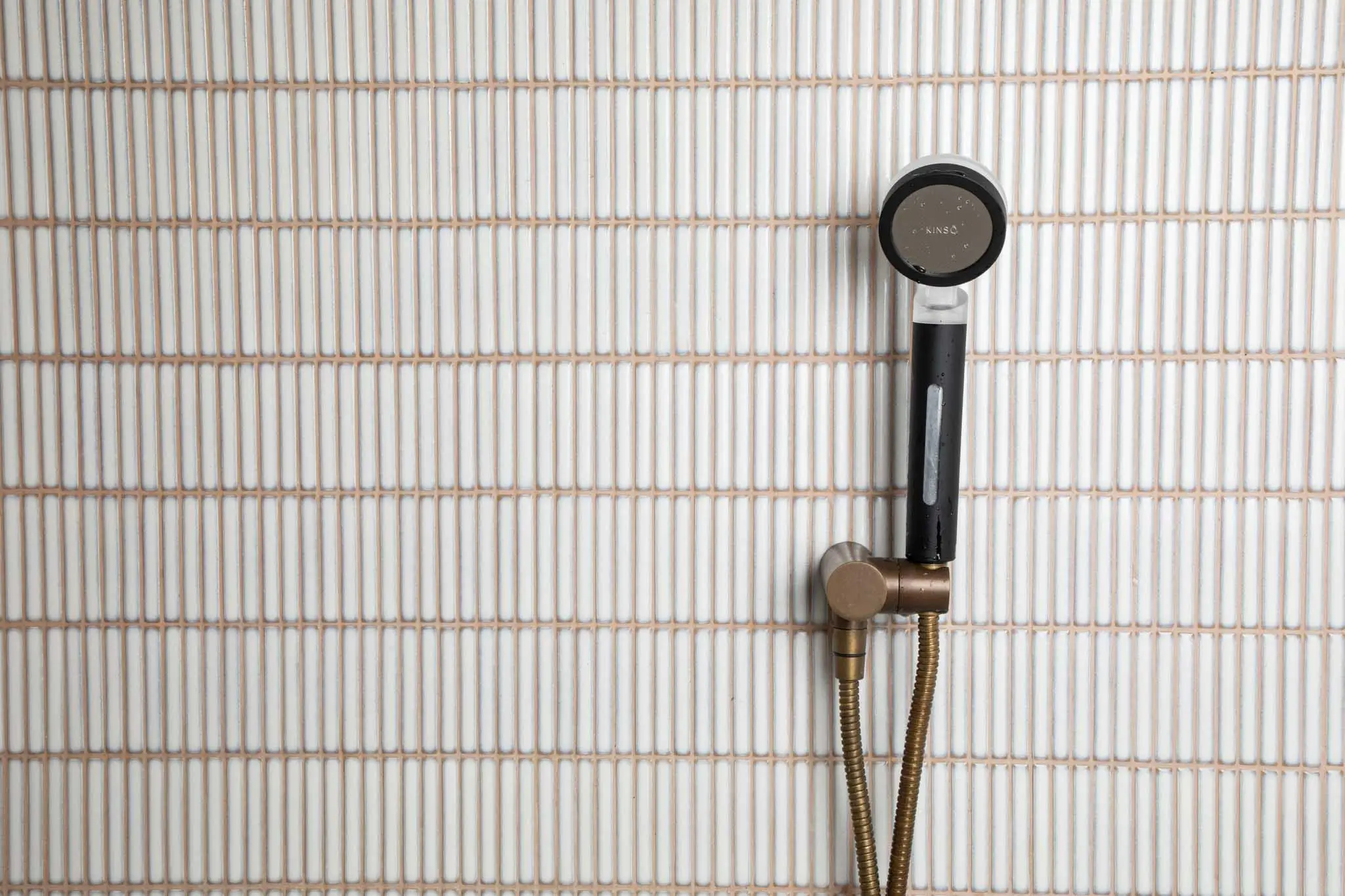
”Every shower filter makes promises. Here's the science that backs ours.
Most shower filters use a single layer of basic granular activated carbon (GAC). It works at room temperature, degrades in heat, and leaves you hoping for the best. KINSŌ takes a different approach. Our Ritual Showerhead and Clarity Tap Filter use a multi-stage filtration system, where each layer targets a specific contaminant type, and the materials are independently tested to back it up.
This is how it works, stage by stage.
”Stage 1: Polypropylene (PP) Pre-Filtration
Before water reaches the core filter media, it passes through a meltblown polypropylene depth filter. This is industry-standard sediment filtration, manufactured from 100% virgin polypropylene with no chemical adhesives.
The 3D microporous structure captures particles progressively from outer to inner layers, trapping sediment, rust, iron particles, sand, silt, and dirt. PP filters are routinely NSF-certified, FDA-compliant for food contact, and operate effectively at temperatures up to 60°C.
Peer-reviewed research (ScienceDirect, 2024) has confirmed that meltblown PP deep-bed filters efficiently remove microplastic particles as small as 1 μm with low pressure drop. That means KINSO’s pre-filtration layer is already working before the water even reaches the carbon.
What it targets: Sediment, suspended solids, rust, iron particles, sand, silt, dirt, and microplastics (≥1 μm).
”Stage 2: Silver-Ion Activated Carbon Fibre (Ag+ ACF)
This is the core of the filter, and it is where KINSŌ separates from the pack.
Activated carbon fibre (ACF) delivers precision adsorption filtration with a surface area of up to 2,500 m²/g. That is approximately five times the purification capacity of standard granular activated carbon. Where GAC relies on a wide, inconsistent range of pore sizes (10³ to 10⁶ Å), ACF features a tight, uniform pore structure (17 to 21 Å) that is purpose-built for chlorine reduction.
The mechanism is chemisorption: hypochlorite ions in your water react with the carbon surface of the fibre, converting to harmless chloride ions and CO₂. This is not just filtering. It is a chemical reaction that neutralises free chlorine on contact.
Why ACF outperforms GAC in the shower
Here is the critical difference. Standard GAC loses effectiveness above 26°C (80°F). Your shower runs at 38 to 43°C. ACF performance actually improves with temperature, making it the superior medium for hot water applications.
Independent comparative testing (WCP Online) measured ACF against GAC and copper-zinc (KDF) media at 105°F, 60 PSI, 2.0 GPM, and 2.0 ppm influent chlorine under continuous flow conditions stricter than NSF Standard 42 on-off cycle testing. ACF demonstrated up to 10 times the adsorption capacity of GAC, with a significantly lower cost per gram of chlorine removed.
ACF is the dominant filtration technology in Japan’s point-of-use water market and is increasingly adopted in NSF-compliant shower filter products globally.
Silver-ion antibacterial protection
KINSŌ’s ACF layer also contains an inorganic silver-based antibacterial agent that inhibits common harmful bacteria, including E. coli and Staphylococcus aureus. This matters because once chlorine has been removed from water sitting inside the cartridge between uses, standard carbon filters become a potential breeding ground for bacteria. The silver-ion treatment actively suppresses bacterial growth in residual water, keeping the filter hygienic between showers.
What it targets: Free chlorine, taste, odour, volatile organic compounds (VOCs), trihalomethanes (THMs), and bacterial growth within the filter.
”Stage 3: Amino Acid Scale Inhibition Media
Derived from malic acid extracted from natural fruit peel, this media is synthesised into porous granules through a pharmaceutical-grade modification process. It is phosphorus-free and nitrogen-free.
On contact with water, the granules slowly release scale-inhibiting compounds that encapsulate calcium and magnesium ions, preventing them from bonding with carbonate ions to form limescale. This reduces showerhead clogging and protects internal components over time.
The released amino acids also produce mildly acidic water, which helps maintain the skin’s natural sebum barrier. With continued use, this may contribute to smoother skin and softer, more manageable hair.
What it targets: Limescale buildup, calcium and magnesium hardness, and pH balance for skin and hair.
”Stage 4: Heavy Metal Ion Removal Ceramic Media
These ceramic media use a patented ion-sieve technology based on inorganic supramolecular composite materials. The internal structure of each ceramic ball creates a unique spatial adsorption force that enables highly efficient, selective capture of trace heavy metal ions in water.
The carrier is made from an environmentally friendly inorganic ceramic substrate, with no harmful components released during use. After reaching adsorption saturation, the media can be separated and recycled in accordance with standard waste sorting guidelines, with no risk of secondary pollution.
What it targets: Trace heavy metal ions in water.
”Stage 5: Biodegradable Polyamide (PA) Fine Filtration
The final layer uses biodegradable PA6, sourced from NUREL in Spain (Promyde BIO product line). This material retains full mechanical and chemical properties during its service life, then biodegrades in active microbial environments at end of life, breaking down into biomass, CO₂, and biogas rather than microplastics.
Independent testing shows up to 84.2% biodegradation after 751 days under anaerobic conditions (ASTM D5511) and 76% after just 90 days in aerobic soil environments (ISO 17556:2020). Compare that to conventional plastics, which take over 100 years to degrade.
Category-level research on PA membranes has demonstrated up to 99.8% microplastic filtration efficiency (RSC Applied Polymers, 2024), with PA6 nanofibre membranes reaching 99.98% efficiency for particles as small as 0.3 μm (ResearchGate, 2013).
What it targets: Fine particles, additional microplastic capture, and sustainable end-of-life disposal.
”The certifications that back it up
We believe in transparency, which is why every claim we make is grounded in third-party testing and recognised certifications.
NSF/ANSI 42 (Material Safety): KINSŌ’s carbon block and filter cartridge components hold NSF/ANSI 42 certification, the internationally recognised standard for drinking water treatment units addressing aesthetic effects. NSF International performed qualification testing at their Ann Arbor, Michigan laboratory, screening for over 150 analytes including volatile organic compounds, semi-volatile compounds, heavy metals, nitrosamines, PAHs, BPA, and PFOA. Result: PASS. All non-detect or within acceptable limits. No detectable leaching of BPA, PFOA, phthalates, benzene, or any regulated VOC from the filter materials.
ISO 9001:2015 (Quality Management): Our manufacturing facility operates under ISO 9001:2015 quality management certification (Certificate NOA2106122, ANAB accredited).
WRAS Approval: Approval No. 2301308, valid through January 2028. Tested to UK Water Supply Regulations and Scottish Water Byelaws, with non-metallic materials meeting BS 6920-1:2014 for wholesome water contact.
EU RoHS Compliance: All three material components passed testing for lead, cadmium, mercury, hexavalent chromium, PBBs, PBDEs, and four phthalates. All results below limits of detection.
”What the research says about chlorine and your skin
We are careful about the claims we make. We do not say KINSŌ “improves skin health” or “cures eczema.” What we do say is that peer-reviewed research supports the logic behind reducing chlorine exposure.
A controlled clinical study from Toyama University, Japan (PubMed 12692355, 2003) found that in atopic dermatitis patients, skin water-holding capacity was significantly reduced at chlorine concentrations of 0.5 mg/L or higher. Australian municipal water typically contains 0.2 to 0.5 mg/L of free chlorine, placing it right at the threshold where sensitive skin may show measurable impairment.
A separate population-based study in the Journal of Allergy & Clinical Immunology (2016, n=1,303 infants) found that higher domestic water calcium carbonate was associated with increased atopic dermatitis risk and elevated transepidermal water loss.
The science supports a simple principle: reducing chlorine and hardness mineral exposure in your shower water may benefit skin barrier function, particularly for sensitive or atopic skin. KINSŌ’s multi-stage system is designed to do exactly that.
”Honest about what we do and what we don't
No filter removes everything. KINSŌ’s ACF targets chlorine, VOCs, and THMs. Our PP layer targets particulates and microplastics. Neither addresses dissolved minerals like fluoride, and we will never claim otherwise.
Our NSF/ANSI 42 certification covers material safety. It confirms the filter does not introduce contaminants into your water. Product-specific chlorine reduction percentage claims require separate performance testing (NSF/ANSI 42 Section 7), which is something we are actively pursuing.
This is how we build trust. Not with vague promises, but with verified science, transparent limitations, and a filter you can see working through our signature transparent chamber.
Built different. Backed by science.
Every layer in a KINSŌ filter exists for a reason. Every material is independently tested. Every claim we make has a citation behind it.
If you have been using an unfiltered showerhead, or a basic GAC filter that loses effectiveness the moment hot water hits it, it might be time to upgrade.


