
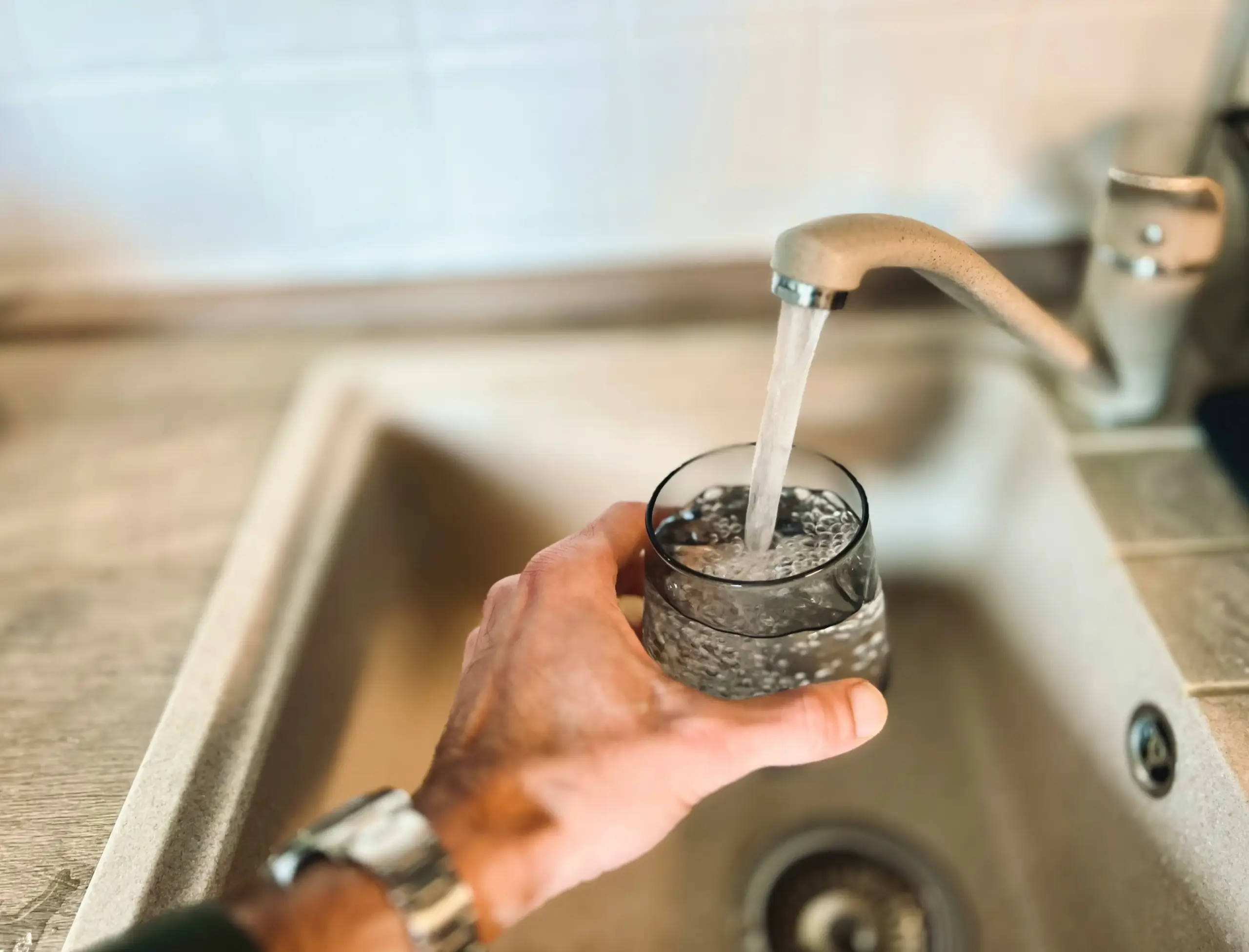
Across Australia, water looks the same in a glass but behaves very differently in your home. City taps deliver chemically treated water designed for public safety. Regional homes often rely on tank systems that capture rainwater or whatever falls from the sky. And more households are turning to point of use filtration as a final layer of control.
The real question is simple. Which option is safest for your home and your wellbeing. The answer depends entirely on the source, the infrastructure behind it, and how carefully that water is managed.
”Let's Start With Understanding Your Water Sources
Tap Water. Treated and regulated
Municipal tap water goes through extensive treatment and is monitored under the Australian Drinking Water Guidelines. It is disinfected, filtered, chemically balanced and fluoridated. Water utilities test constantly and must report results publicly.
Tap water comes with oversight. Tank water does not. That single difference shapes most of the safety conversation.
Tank Water. Self collected and self managed
Rainwater tanks rely on roof surfaces, gutters and storage systems. The quality depends on maintenance, catchment hygiene and environmental conditions. Domestic tanks are not routinely tested and you are fully responsible for the safety of whatever collects inside them.
Filtered Water. The final layer of protection
Filtration enhances any source by removing targeted contaminants. Carbon removes chlorine and organic compounds. Reverse osmosis strips dissolved solids and heavy metals. UV treatment neutralises pathogens. Filtration does not replace proper water management. It strengthens it.
”Tap Water. Strong foundations with clear limitations
The strengths
Tap water is safe by design. Treatment plants eliminate pathogens and stabilise chemistry. Outbreaks in major cities are extremely rare.
Regulatory oversight ensures utilities meet strict quality standards and notify consumers when issues arise.
Supply is consistent and effortless. Turn on the tap and water flows.
Fluoridation supports dental health across most of Australia.
The limitations
Chlorine and chloramines remain in the water as it travels to your home. They are essential but harsh on skin and hair especially in hot showers.
Aging infrastructure introduces risk. Older homes may still contain lead solder or outdated plumbing materials that leach metals into stagnant water.
Hardness varies significantly across Australia and can trigger dryness, flakiness and irritation.
Public water is built for public safety not personal comfort or skin health. You cannot customise it to your needs.
Tap water is safe for drinking but often not optimised for the health of skin, hair and household appliances.
”Tank Water. Real benefits with real risks
Tank water is common, especially in regional or semi rural suburbs. But without consistent maintenance, quality drops quickly.
Microbial contamination
Research across Australia consistently finds E coli and coliform bacteria present in a high percentage of rainwater tanks. The reasons are predictable. Roof surfaces collect bird, possum and rodent droppings. Insects and small animals sometimes enter tanks. Long dry periods allow debris to accumulate before the first heavy rain washes it all into storage.
Chemical contamination
Less visible but equally important are chemical contaminants. Multiple studies show elevated levels of lead in tank water, often from roof materials, tank components or atmospheric deposition. Other detected chemicals include antimony, arsenic, barium, cadmium, chromium, pesticides and PFAS.
Acidity and corrosion
Rainwater is naturally acidic, often with a pH below five. This acidity can corrode pipes and fittings and release additional metals into the water supply.
Maintenance versus reality
Guidelines recommend regular roof cleaning, first flush systems, mosquito proof screens, periodic disinfection and sludge removal. Most households do far less. Studies show almost no tanks are fully maintained to recommended standards.
When tank water makes sense
For non drinking uses such as gardens, toilets and laundry, tank water is cost effective and sustainable.
With correct design and UV disinfection, well maintained systems can produce potable water.
In regional areas without reticulated supply, tanks are essential and manageable with discipline.
”Filtered Water With Filtration Function That Works
For tap water
Activated carbon removes chlorine, chloramines, pesticides, industrial chemicals and taste compounds. It improves comfort immediately.
Reverse osmosis removes heavy metals, dissolved solids and microplastics, producing very soft water.
Filtration enhances the quality of already treated water but does not eliminate every contaminant unless the filter type matches the issue.
For tank water
Carbon alone does not remove bacteria or viruses.
Effective tank water treatment requires a combination of sediment filtration and UV disinfection or chlorination to ensure microbial safety.
Boiling works but is impractical for daily use.
Maintenance is essential
A filter that is not replaced on time becomes a contamination point. It can release trapped materials back into the water and encourage microbial growth. Every system requires proper upkeep.
”The KINSŌ Perspective
Australian water is safe in principle but unpredictable in practice. Treatment systems vary. Infrastructure ages. Tank maintenance lapses. And the quality that matters most for your daily life is not just safety. It is the way water interacts with your skin, hair and wellbeing.
KINSŌ exists to bridge that gap. Tap water remains chemically treated long after it leaves the plant. Hardness minerals are not removed. Chlorine stays active until it reaches your shower. These elements strip natural moisture, disrupt the acid mantle and contribute to dryness, irritation and dullness.
Our filtration systems are designed to give you control at the point that matters most. They improve taste and purity for everyday use and significantly enhance water quality for bathing where your skin and hair are most exposed. They remove chlorine, reduce impurities, soften sensory feel and support a healthier barrier on the body.
In a country where water quality changes from postcode to postcode, KINSŌ brings consistency. It gives you a ritual of clarity no matter where you live or what flows from your tap.


